Position Size Simulator: Why Good Strategies Still Blow Accounts
Same win rate. Same risk-reward. Same strategy.
One trader survives.
One trader blows the account.
The difference is position size.
Monte Carlo Position Size Simulator
Use the interactive simulation below to test how different risk parameters impact your account survival across a series of trades. Select your win rate, reward-to-risk ratio, and capital to see median ending balances, worst drawdowns, and emotional survival scores.
Monte Carlo Position Size Simulator
Why Good Strategies Fail Under Sizing Pressure
Most traders search for better entries when the real problem is size.
A system can be profitable and still feel impossible to trade.
Why?
Because the trader cannot emotionally survive the normal losing streak.
A 45% win-rate system can be profitable if winners are bigger than losers. But 45% win rate also means losses are common. Three losses in a row are not rare. Five losses in a row can happen. If size is too large, a normal streak feels like disaster.
That is when rules break.
The trader stops thinking: “This is part of my system.”
And starts thinking: “Something is wrong. I need to recover.”
Position size controls emotional pressure.
- Small size gives you room to follow the plan.
- Oversize makes every candle feel personal.
The mistake traders make with risk-reward
Risk-reward looks clean in a spreadsheet.
But live trading is not a spreadsheet.
A trader may say: “I risk 2% to make 4%, so it is fine.”
But if that trader loses four trades in a row, the account is down around 8% before slippage, charges, and emotional mistakes.
Now the next trade carries pressure.
Now the trader wants recovery.
Now the setup quality drops.
The position size did not just affect money.
It affected decision quality.
Example: Capital Survival Simulation
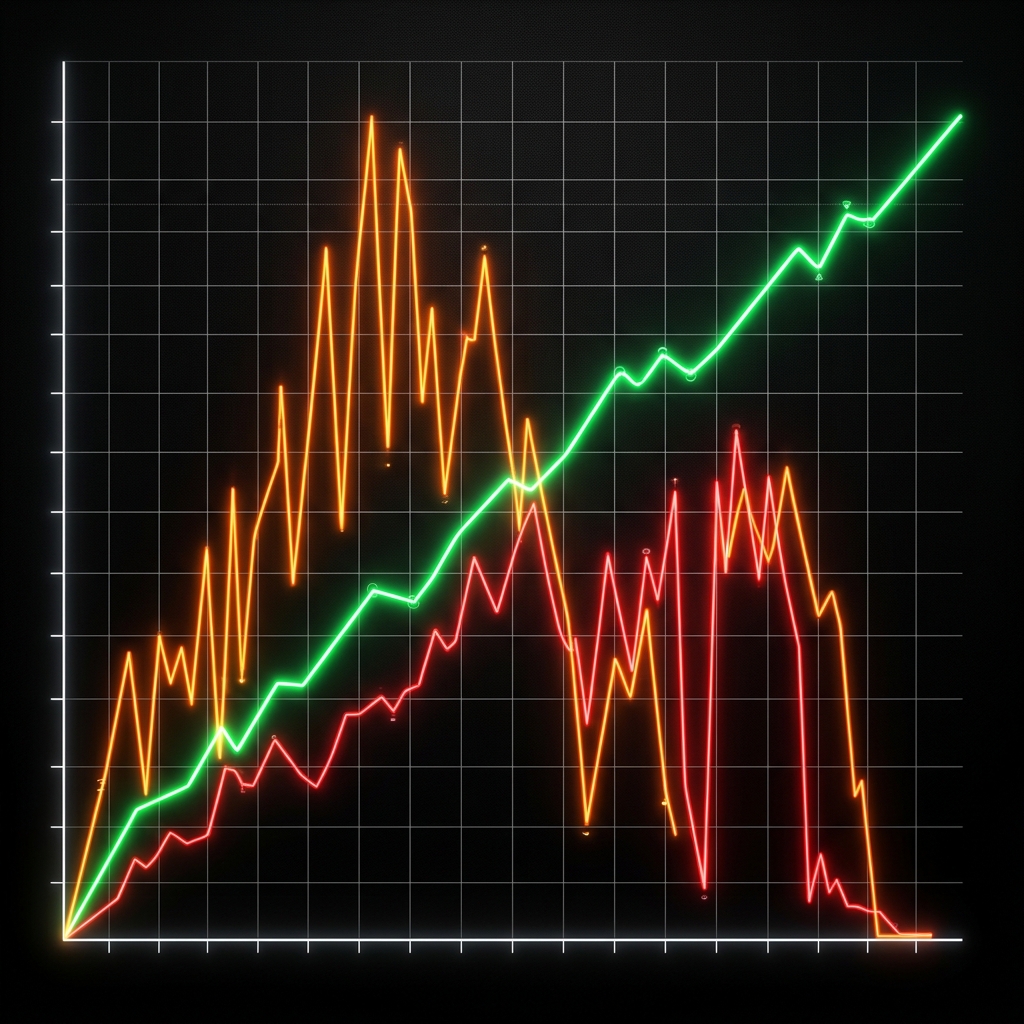
Below is a Monte Carlo capital survival audit showing how risk-of-ruin percentages surge when sizing exceeds optimal safety thresholds.
Example: Capital Survival Simulation
1,000 Iteration Monte Carlo Simulation
At 0.5% risk, your account has a 99.8% probability of surviving a sequence of 100 trades with your current win expectancy. At 5% risk, the chance of drawdown exceeding 30% surges to 96%, causing inevitable rule-breaking behaviors.
The practical position size test
Before increasing size, check if you satisfy these emotional checkpoints:
Emotional Survival Checklist
If the answer to any of these is no, your size is too big.
The right size is not the size that maximizes profit.
It is the size that lets you execute the system without emotional damage.
Before risking real money, simulate 100 trades.
Not to predict the future.
To understand the pain your system can create.
A strategy is not only about expectancy.
It is about survival.